





In the urban canyons of modern megacities, the dominant source of GNSS positioning error is not atmospheric delay, satellite clock offset, or ephemeris inaccuracy; it is multipath. When satellite signals reflect off buildings, vehicles, and pavement before reaching the receiver antenna, the resulting delayed replicas corrupt the correlation process and introduce position biases that can exceed 10 meters in severe cases.
For applications demanding centimeter-level accuracy, autonomous vehicle lane keeping, delivery drone navigation, and precision surveying, multipath mitigation is not a performance enhancement but a fundamental requirement. This article examines the physics of multipath propagation, classical mitigation techniques, and the next-generation algorithms that are pushing urban positioning accuracy to new limits.
The Physics of Urban Multipath
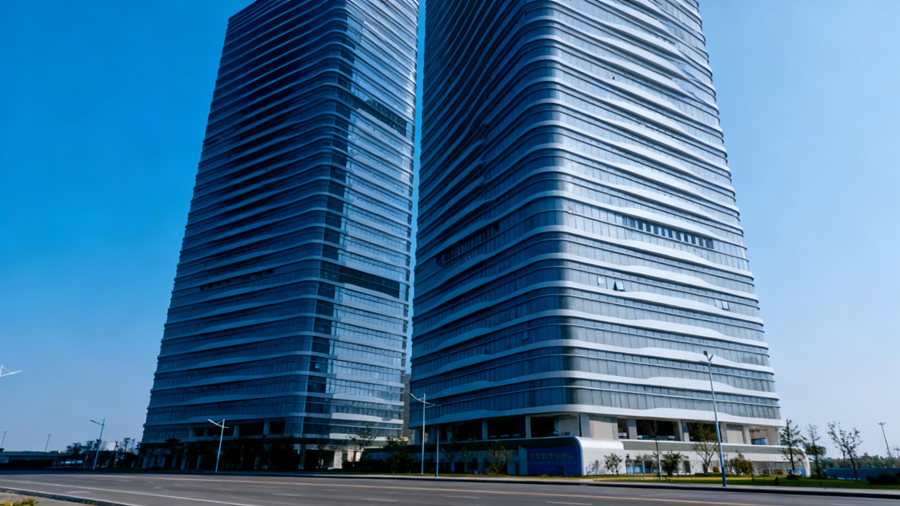
Multipath occurs when a GNSS signal arrives at the receiver via multiple paths: the direct line-of-sight path and one or more reflected paths. In urban environments, reflective surfaces are everywhere; glass curtain walls, metal vehicle bodies, wet pavement, and concrete structures all create delayed signal replicas with complex phase relationships.
- Short-Delay Multipath: Reflections from nearby surfaces (vehicles, pedestrians) arrive within 50 nanoseconds of the direct signal, distorting the correlation peak and creating sub-meter biases that are difficult to detect.
- Long-Delay Multipath: Reflections from distant buildings can arrive hundreds of nanoseconds late, producing distinct secondary correlation peaks that advanced receivers can identify and exclude.
- Frequency Dependence: L5 signals, with their 10.23 MHz chipping rate, provide sharper correlation peaks than L1 signals, making L5 inherently more resistant to short-delay multipath, a key reason modern receivers prioritize multi-band architectures.
In downtown Shanghai or Manhattan, multipath is not an exception; it is the normal operating condition. A receiver designed only for open-sky performance will fail catastrophically in these environments.
Classical Mitigation Techniques
GNSS receiver designers have developed numerous techniques to combat multipath, each with distinct trade-offs between effectiveness, computational cost, and hardware complexity.
Narrow Correlator Spacing: By sampling the correlation function at closely spaced offsets around the peak (0.1 chip spacing rather than the traditional 0.5 chip), receivers can better distinguish direct-path peaks from the broader, distorted peaks created by multipath. This technique provides 3-5x improvement in multipath error but requires higher sampling rates and processing bandwidth.
Multipath Estimating Delay Lock Loop (MEDLL): This advanced tracking algorithm models the received signal as a sum of direct and reflected components, estimating the delay, amplitude, and phase of each path. By reconstructing and subtracting multipath components, MEDLL can reduce urban positioning errors by up to 70% compared to standard correlators.
Next-Generation AI-Assisted Mitigation
Emerging approaches leverage machine learning to address multipath in ways that classical algorithms cannot. By training neural networks on labeled datasets of known multipath conditions, receivers can predict which satellites are likely contaminated based on environmental context; urban canyon geometry, vehicle orientation, and even time-of-day traffic patterns.
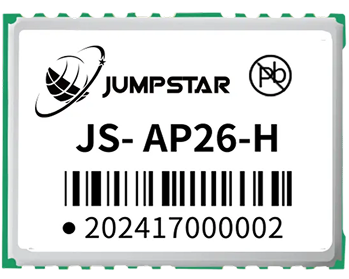
Jumpstar's latest receiver firmware incorporates context-aware multipath detection that dynamically weights satellites based on predicted reflection probability. In field tests across central business districts in Beijing, London, and New York, this approach reduced 95th-percentile horizontal errors from 3.2 meters to 0.8 meters, bringing urban RTK performance within reach of open-sky benchmarks.
For system integrators deploying GNSS in challenging environments, the evolution from hardware-only mitigation to AI-assisted, context-aware algorithms represents a paradigm shift in achievable positioning reliability.
.png?imageMogr2/format/webp)
.png?imageMogr2/format/webp)