
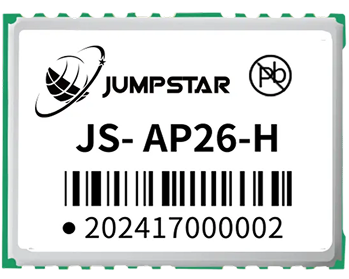
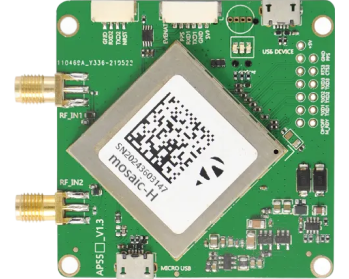
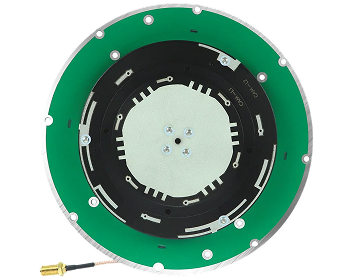
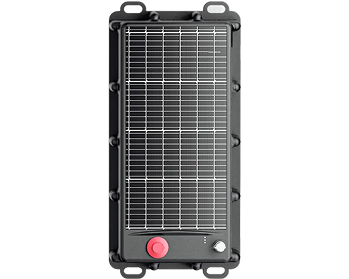




If you are designing a product that needs to know where it is — a drone, a robot, a fleet tracker, or a precision agriculture system — the component that makes that possible is a GNSS module. For OEM engineers and system integrators, choosing the right module early in the design cycle prevents costly redesigns, performance shortfalls, and certification delays down the line.
This guide breaks down what GNSS modules are, how they work, what types are available, and how to evaluate them for industrial applications. Whether you are sourcing your first positioning component or expanding an existing product line, the goal is to give you the technical context needed to make an informed decision.
Engineers, hardware designers, procurement managers, and system integrators evaluating GNSS positioning modules for OEM products in UAVs, robotics, surveying, agriculture, intelligent transportation, and industrial IoT.
Table of Contents
1. What Is a GNSS Module?
A GNSS module is a self-contained electronic component that receives signals from global navigation satellite systems and converts them into position, velocity, and time (PVT) data. It integrates a GNSS antenna input (or an embedded antenna), an RF front-end, a baseband processor, and a navigation processor into a single surface-mount package — typically no larger than a coin.
The term "GNSS" (Global Navigation Satellite System) is the umbrella designation for all satellite constellations: GPS (United States), GLONASS (Russia), Galileo (European Union), and BeiDou (China). A modern GNSS receiver module can track signals from all four constellations simultaneously, which improves positioning accuracy, reduces time-to-first-fix, and maintains signal reliability in challenging environments like urban canyons or forested areas.
For OEM developers, the key distinction is that a GNSS module is not a finished product — it is a building block. You integrate it into your PCB, connect an antenna, supply power, and communicate with it via standard serial interfaces (UART, SPI, I2C). The module outputs standard NMEA sentences or proprietary binary protocol data that your application processor interprets to determine location.
This is different from a GNSS receiver (a complete device with enclosure, display, and battery) or a GNSS evaluation kit (a development board for testing). A module is the raw positioning engine designed to be embedded inside your product.
2. How GNSS Modules Work
Understanding the basic operating principle helps you evaluate specifications more critically. Here is the signal flow inside a typical GNSS positioning module:
2.1 Signal Reception
The process starts at the antenna, which captures L-band radio signals broadcast by GNSS satellites. Each constellation transmits on slightly different frequencies — GPS L1 at 1575.42 MHz, L5 at 1176.45 MHz, GLONASS L1 around 1602 MHz, Galileo E1 at 1575.42 MHz, and BeiDou B1I at 1561.098 MHz. A dual frequency gnss module can receive two of these bands simultaneously, which allows it to correct ionospheric delay errors and achieve better accuracy than a single-band module. Representative dual-band modules from JUMPSTAR include the JS-TP26-M (L1+L5, 1.0m accuracy).
2.2 RF Front-End Processing
The weak satellite signals pass through a low-noise amplifier (LNA), then a bandpass filter to reject out-of-band interference, and finally into a radio frequency integrated circuit (RFIC) that downconverts the signal to an intermediate frequency (IF) and digitizes it through an analog-to-digital converter (ADC).
2.3 Baseband Correlation
The digital samples enter the baseband processor, which contains dozens or hundreds of hardware correlators. Each correlator tracks one satellite signal by matching the spreading code — a pseudorandom noise (PRN) sequence unique to each satellite. The more correlator channels a module has, the more satellites it can track at once. For example, a module with 210 tracking channels can simultaneously track satellites across all four constellations, which is exactly what you get with the JS-WP10, a compact 10.5×9.7mm L1 module from JUMPSTAR.
2.4 Position Calculation
Once the baseband processor has locked onto at least four satellites, the navigation processor calculates position using trilateration. It measures the time-of-flight for each satellite signal, applies corrections for atmospheric delay, satellite clock drift, and relativistic effects, and outputs the final PVT solution. The result is delivered as NMEA sentences (GGA, RMC, GSA, etc.) or a proprietary binary format at update rates ranging from 1 Hz to 25 Hz depending on the module.
3. Main Components of a GNSS Module
A GNSS module may be small, but it packs several critical subsystems into a single package. Knowing what is inside helps you understand why modules with similar footprints can differ significantly in performance and price.
| Component | Function | Why It Matters for OEMs |
|---|---|---|
| GNSS Antenna | Captures satellite signals. Some modules integrate the antenna on-package; others require an external antenna. | Integrated antennas simplify design and reduce BOM cost. External antennas offer better placement flexibility and signal gain. The JS-AUP56FG-9 from JUMPSTAR integrates the antenna directly, eliminating external RF matching. |
| LNA (Low-Noise Amplifier) | Boosts weak satellite signals before processing. | Determines sensitivity. A high-quality LNA enables tracking in foliage, urban canyons, and weak-signal environments. |
| RF Front-End | Filters, downconverts, and digitizes the RF signal. | Bandwidth and quantization depth affect multi-constellation performance and anti-jamming capability. |
| Baseband Processor | Runs correlators to acquire and track satellite signals. | Channel count and processing power determine how many satellites can be tracked simultaneously. The JS-WP10 features 210 channels for robust all-constellation tracking. |
| Navigation Processor | Computes PVT solution and manages output protocols. | Determines update rate, positioning algorithm sophistication, and support for augmentation services. The JS-RP26-2 outputs at 20Hz for dynamic applications. |
| Flash Memory | Stores firmware, almanac, and ephemeris data for fast startup. | Modules with embedded FLASH (like the JS-UP26F-1) achieve faster warm starts and don't require host-side data storage. |
| TCXO / Crystal Oscillator | Provides the timing reference for signal processing. | A TCXO (temperature-compensated crystal oscillator) improves positioning stability across temperature ranges compared to a standard crystal. |
For an embedded gnss module designed into a compact device, the integration level of these components directly affects your PCB layout complexity, BOM cost, and time-to-market. Modules that integrate the antenna, FLASH, and TCXO reduce external component count significantly.
4. Satellite Constellations Supported by GNSS Modules
A major factor distinguishing older GPS-only receivers from modern GNSS modules is multi-constellation support. Here is what each system brings:
| Constellation | Country | Approx. Satellites | Primary Frequencies |
|---|---|---|---|
| GPS | United States | 31 | L1 (1575.42 MHz), L5 (1176.45 MHz) |
| GLONASS | Russia | 24 | L1 (1602 MHz range) |
| Galileo | European Union | 28 | E1 (1575.42 MHz), E5 (1176.45 MHz) |
| BeiDou | China | 30+ | B1I (1561.098 MHz), B1C (1575.42 MHz) |
A multi constellation gnss module tracks satellites from all four systems at the same time. Why does this matter? More satellites in view means faster time-to-first-fix, better geometry (lower Dilution of Precision), and more robust tracking when some signals are blocked by buildings or terrain. In practical terms, a module supporting all constellations can achieve a position fix in seconds where a GPS-only receiver might take minutes, and maintain accuracy in environments where GPS-only performance would degrade significantly.
Most modern modules, including the entire JUMPSTAR Standard Precision line, support all-constellation concurrent tracking as a baseline feature.
5. Types of GNSS Modules
GNSS modules are not one-size-fits-all. They are optimized for different accuracy tiers, power budgets, and application requirements. Understanding the categories helps narrow your selection quickly.
5.1 Standard Precision GNSS Modules
These modules track L1 (or L1+L5 dual-band) signals and deliver 1–3 meter accuracy without correction services. They are the workhorses of the positioning world — affordable, compact, and sufficient for the majority of consumer and industrial applications. The JUMPSTAR Standard Precision Modules line includes 28 models covering L1 single-band and L1+L5 dual-band designs. For entry-level applications, the JS-WP10 (10.5×9.7mm, 210 channels) offers full-constellation tracking in a miniature footprint. For applications that need faster startup times, the JS-UP26F-1 adds embedded FLASH memory, reducing warm-start TTFF to under 5 seconds.
5.2 High Precision RTK Modules
RTK (Real-Time Kinematic) modules use carrier-phase differential corrections to achieve centimeter-level accuracy. A high precision gnss module with RTK support typically tracks dual or triple frequencies (L1/L2/L5) and requires a correction data stream from a base station or network RTK service. These are essential for surveying, precision agriculture, and autonomous systems where sub-meter accuracy is non-negotiable.
5.3 Dead Reckoning (DR) Modules
DR modules fuse GNSS data with inertial sensors (accelerometers, gyroscopes) to maintain positioning continuity when satellite signals are temporarily lost — in tunnels, underground parking, or urban canyons. They are critical for automotive telematics and autonomous driving applications.
5.4 Timing Modules
Specialized modules optimized for precise time synchronization rather than position. They output disciplined clock signals with nanosecond-level accuracy for telecommunications infrastructure, power grid synchronization, and financial transaction timestamping.
5.5 Antenna-Integrated Modules
These embed the GNSS antenna directly on the module package, eliminating the need for external antenna design and RF matching. They simplify PCB layout and accelerate time-to-market for space-constrained applications. The JS-AUP56FG-9 from JUMPSTAR is a prime example: it combines an integrated antenna with wide-voltage operation (4.5V–20V) and a 25Hz update rate, making it ideal for industrial deployments where design simplicity and fast data output are equally important.
6. Representative JUMPSTAR GNSS Modules
To give you a concrete sense of what modern GNSS modules look like in practice, here are five representative models from JUMPSTAR's Standard Precision portfolio — each optimized for a different set of requirements. These are real modules shipping today to OEM customers worldwide.
6.1 JS-WP10 — Ultra-Compact, Cost-Effective L1 Module
The JS-WP10 is JUMPSTAR's most compact GNSS module, measuring just 10.5×9.7mm. With 210 tracking channels and concurrent reception of GPS, GLONASS, Galileo, and BeiDou, it delivers 2.0m CEP accuracy at a 5Hz update rate. Its small footprint and competitive BOM cost make it the go-to choice for consumer drones, wearable trackers, and any application where PCB real estate is at an absolute premium. Despite its size, it offers full multi-constellation support — a feature not always found in modules this small.
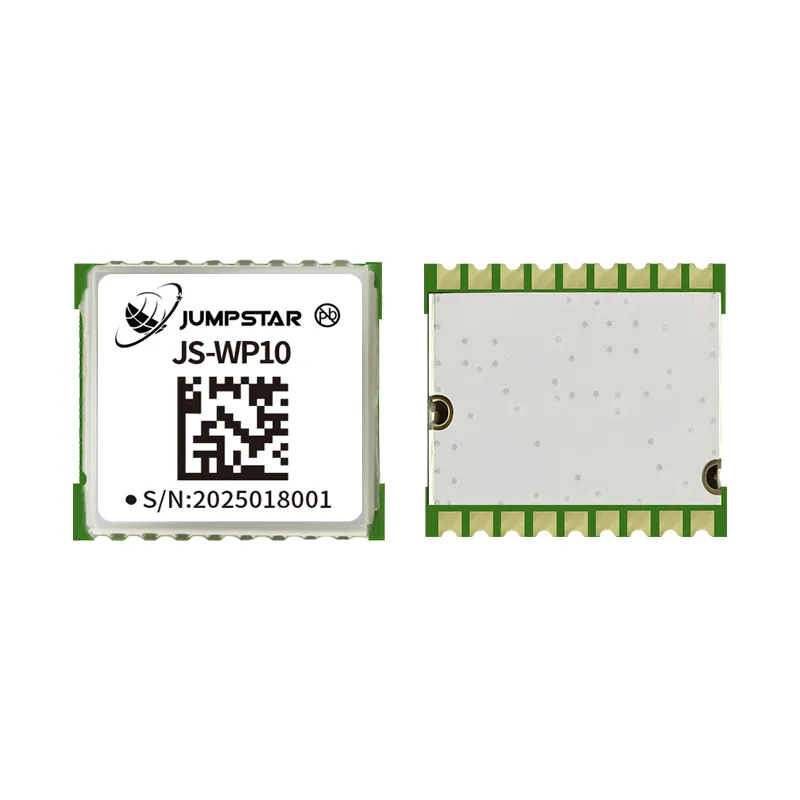
JUMPSTAR JS-WP10 — ultra-compact 10.5×9.7mm multi-constellation GNSS module.
6.2 JS-UP26F-1 — L1 Module with Embedded FLASH for Fast Starts
The JS-UP26F-1 sets itself apart with onboard FLASH memory that stores satellite almanac and ephemeris data between power cycles. This means warm-start TTFF drops to just a few seconds — critical for devices that power on intermittently, such as asset trackers, handheld GPS units, and battery-powered IoT sensors. In a 16×12mm package with 10Hz update rate, it combines fast startup performance with full constellation support.
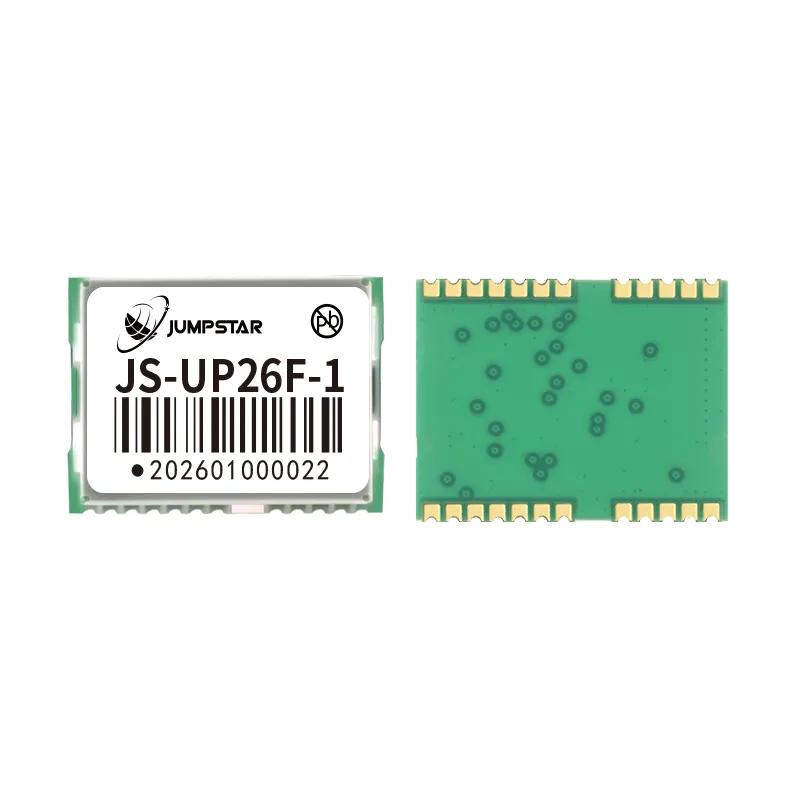
JUMPSTAR JS-UP26F-1 — L1 GNSS module with embedded FLASH for fast warm starts.
6.3 JS-TP26-M — Sub-Meter Accuracy with Dual-Band L1+L5
For applications that need better accuracy without the complexity of RTK infrastructure, the JS-TP26-M is the answer. This dual-band (L1+L5) module achieves 1.0m accuracy by correcting ionospheric delay errors using the second frequency. In a 16×12.2mm package with 135 channels, it is well-suited for UAV photogrammetry, precision agriculture drones, and industrial inspection robots where sub-meter positioning directly translates to better mission outcomes. The dual-band design provides a tangible accuracy improvement over single-band L1 modules without adding RTK cost or complexity.
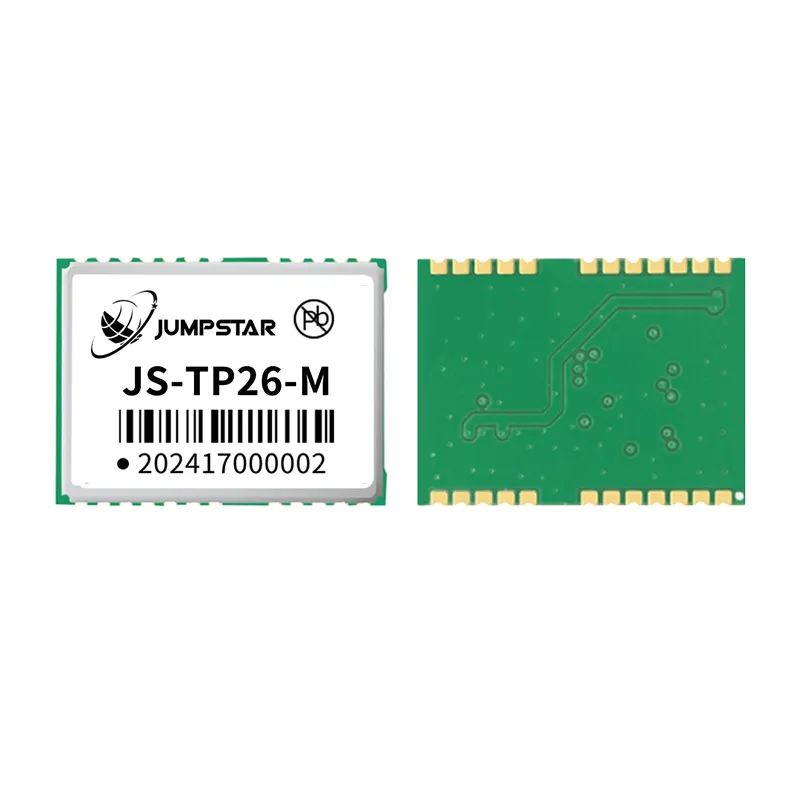
JUMPSTAR JS-TP26-M — dual-band L1+L5 module for sub-meter accuracy.
6.4 JS-AUP56FG-9 — Antenna-Integrated, Wide-Voltage Industrial Module
The JS-AUP56FG-9 simplifies OEM integration by embedding the GNSS antenna directly on the module. This eliminates external antenna design, RF impedance matching, and connector placement — compressing weeks of RF engineering into a drop-in component. With a 25Hz update rate (the fastest in JUMPSTAR's lineup) and a wide input voltage range of 4.5V–20V, it is purpose-built for vehicle-powered industrial applications where fast position updates and electrical robustness are essential. Think fleet telematics, construction equipment tracking, and heavy machinery guidance.
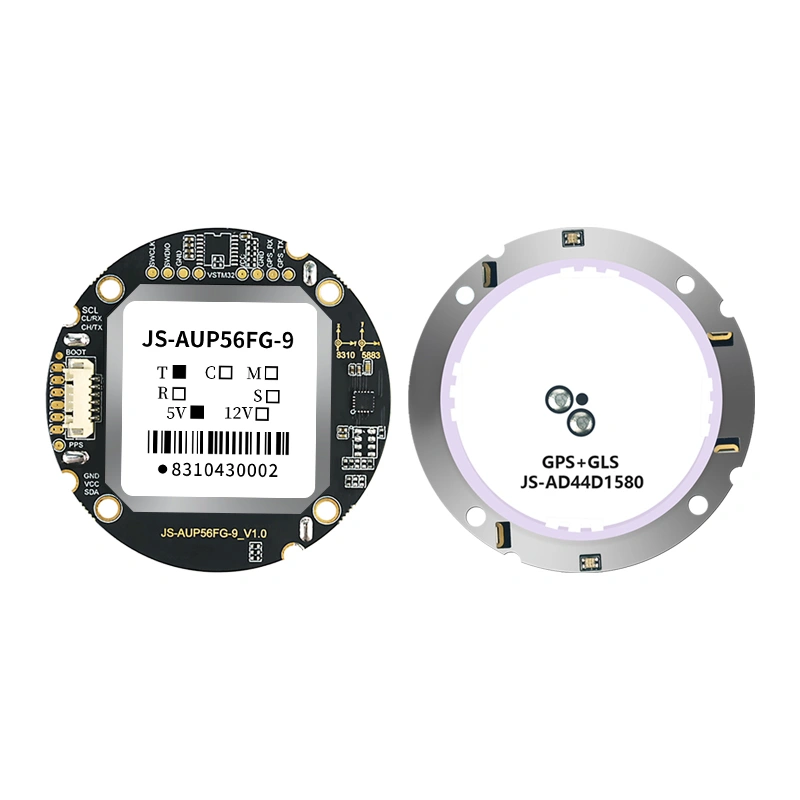
JUMPSTAR JS-AUP56FG-9 — antenna-integrated industrial module with 25Hz update rate.
6.5 JS-RP26-2 — Lightweight Dual-Band, High-Speed 20Hz
Weighing under 1.1 grams, the JS-RP26-2 is JUMPSTAR's lightest dual-band module — and one of the few modules in its class to combine L1+L5 accuracy (1.0m) with a 20Hz update rate in such a lightweight package. For drones, small UGVs, and wearable motion-capture devices, every gram matters. The 20Hz output rate ensures responsive, low-latency positioning for dynamic platforms that change direction and speed rapidly.
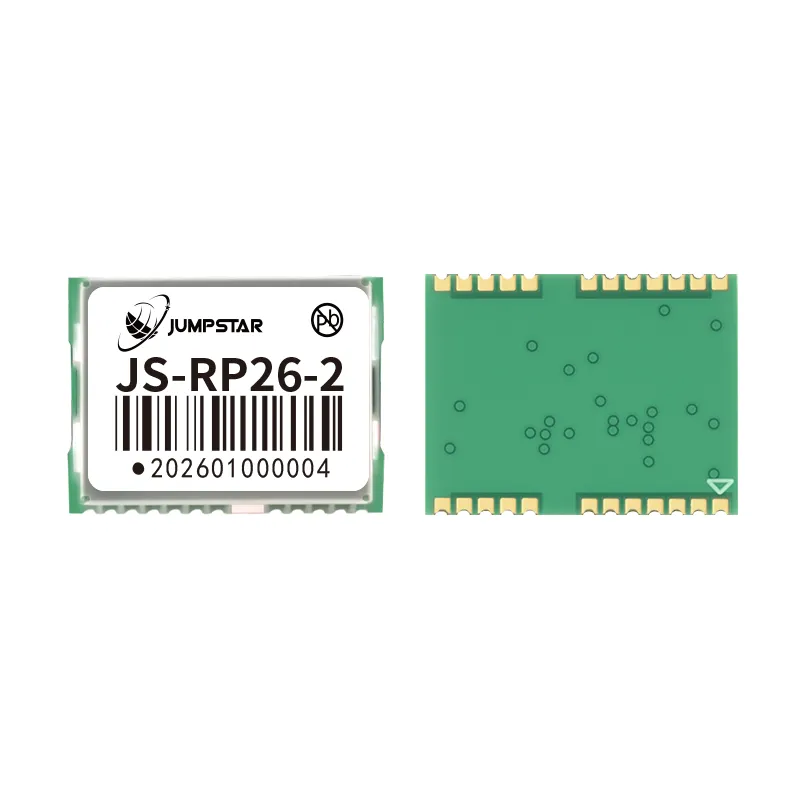
JUMPSTAR JS-RP26-2 — ultra-lightweight dual-band module with 20Hz update rate.
| Model | Bands | Accuracy | Rate | Size | Key Advantage |
|---|---|---|---|---|---|
| JS-WP10 | L1 | 2.0m | 5Hz | 10.5×9.7mm | Ultra-compact, cost-effective |
| JS-UP26F-1 | L1 | 2.0m | 10Hz | 16×12mm | Embedded FLASH, fast warm starts |
| JS-TP26-M | L1+L5 | 1.0m | 5Hz | 16×12.2mm | Dual-band sub-meter accuracy |
| JS-AUP56FG-9 | L1 | 2.0m | 25Hz | Integrated | Integrated antenna + wide voltage |
| JS-RP26-2 | L1+L5 | 1.0m | 20Hz | <1.1g | Ultra-lightweight, high-speed |
7. Key Features to Consider
When comparing GNSS modules for an industrial product, the datasheet can be overwhelming. Here are the specifications that actually matter for real-world performance:
7.1 Positioning Accuracy
Stated as CEP (Circular Error Probable) or 2D RMS. Standard precision modules typically specify 2.0m CEP, while dual-band modules can achieve 1.0m. RTK modules reach centimeter-level. Consider the application: a fleet tracker tolerates 2–3m, but a UAV photogrammetry payload needs sub-meter — and for that, a dual-band module like the JS-TP26-M or JS-RP26-2 is the right choice.
7.2 Update Rate
How often the module outputs a new position fix — measured in Hz. A 1 Hz rate is fine for asset tracking, but UAVs and robotics need 10–20 Hz for responsive control. The JS-RP26-2 supports 20Hz, while the JS-AUP56FG-9 goes up to 25Hz — both suitable for dynamic platforms.
7.3 Tracking Sensitivity
Measured in dBm, this determines the minimum signal strength the module can acquire and track. Higher sensitivity (more negative dBm values) means the module works in more challenging environments. Look for acquisition sensitivity below -145 dBm and tracking sensitivity below -160 dBm for robust performance.
7.4 Power Consumption
A low power gnss module is essential for battery-powered devices. Power ranges from under 25 mA for ultra-low-power modules to over 100 mA for high-performance RTK modules. Consider both continuous tracking current and acquisition current, as the latter can be significantly higher during cold starts. The JS-WP10's small package and efficient power profile make it well-suited for battery-constrained designs.
7.5 Form Factor and Package Size
Module footprints range from 10×10mm for ultra-compact designs to 20×20mm for antenna-integrated modules. The JS-WP10, at 10.5×9.7mm, is designed for space-constrained applications where PCB real estate is at a premium. For designs that can accommodate a larger footprint, antenna-integrated options like the JS-AUP56FG-9 eliminate external antenna design altogether.
7.6 Anti-Jamming and Anti-Spoofing
In industrial environments with RF interference, modules with built-in anti-jamming filters and spoofing detection are increasingly important. The JS-AUP25FG-1 offers anti-jamming capability, protecting positioning integrity in signal-degraded environments.
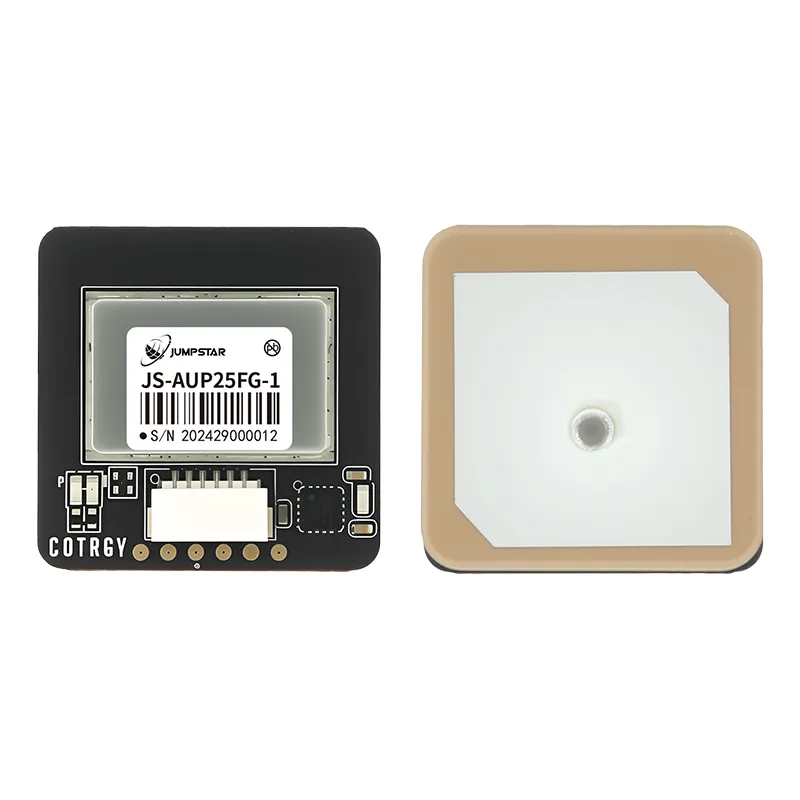
JUMPSTAR JS-AUP25FG-1 — antenna-integrated module with anti-jamming capability.
7.7 Interfaces and Protocols
Most modules support UART (with NMEA 0183 and proprietary binary protocols), SPI, and I2C. Check voltage levels (1.8V vs 3.3V logic), baud rate support, and whether the module supports configurable message rates. Industrial applications may also need CAN bus or pulse-per-second (PPS) output.
7.8 Operating Temperature Range
For industrial gnss module deployments, the operating temperature range is critical. Consumer-grade modules are rated for -40°C to +85°C, while industrial-grade modules extend to +85°C or beyond. Verify this matches your product's certification requirements.
8. Industrial Applications
GNSS modules are embedded across a wide range of industries. Below, each application area is broken down — not just what the requirements are, but why GNSS matters specifically for that domain.
8.1 UAVs & Drones
Drones demand lightweight, low-power GNSS modules with high update rates to maintain stable flight and precise navigation. A consumer drone performing waypoint missions needs reliable positioning at 5–10Hz, while professional survey drones require dual-band modules delivering sub-meter accuracy for photogrammetry and 3D mapping. JUMPSTAR addresses both tiers: the JS-WP10 for cost-sensitive consumer platforms, and the JS-TP26-M or JS-RP26-2 for professional UAVs that need L1+L5 accuracy. Every gram saved on the GNSS module is a gram gained for payload or flight time — hence the JS-RP26-2's sub-1.1g design.
8.2 Robotics & AGVs
Autonomous ground vehicles (AGVs) and service robots operate in mixed indoor-outdoor environments where GNSS alone is insufficient. They need dead reckoning modules that fuse satellite positioning with inertial sensor data to maintain trajectory through tunnels, warehouses, and signal-denied zones. For outdoor-dominant robots like delivery bots and agricultural robots, a standard precision module with fast TTFF is more practical. The key requirement is positioning continuity — the module must not lose track when the robot transitions from open sky to partial cover.
8.3 Surveying & Mapping
Professional surveying demands centimeter-level accuracy that only RTK-enabled multi-band GNSS modules can deliver. Surveyors need reliable fixed solutions even under canopy or near structures, which requires modules with high channel counts and robust multi-path rejection. L1+L2+L5 triple-band RTK modules are the gold standard, providing the carrier-phase measurements and fast ambiguity resolution that professional GNSS rovers depend on. JUMPSTAR's high precision RTK receiver line is designed for these applications.
8.4 Precision Agriculture
Modern farming relies on GNSS for auto-steering tractors, variable-rate application, yield mapping, and field boundary management. The accuracy requirement here is unambiguous: RTK-level centimeter precision is mandatory for operations like planting row alignment and section control. Tractors and harvesters also operate in dusty, high-vibration environments where the GNSS module must maintain lock despite physical stress and potential RF interference from onboard electronics. Dual-band and RTK-capable modules with robust mechanical design are the standard.
8.5 Intelligent Transportation
Vehicle telematics, fleet management, and V2X (vehicle-to-everything) communication depend on continuous, reliable GNSS positioning. Urban environments pose the hardest challenge — tall buildings create multipath reflections and signal blockage known as the "urban canyon" effect. Dead reckoning modules that bridge GNSS outages with inertial data are essential here. Additionally, onboard anti-jamming capability protects against accidental or deliberate RF interference that could compromise fleet tracking integrity. The JS-AUP25FG-1, with its anti-jamming capability, is a representative industrial-grade choice for transportation applications.
8.6 Asset Tracking & Fleet Management
For logistics and supply chain applications, the priorities shift to power consumption, cost, and compactness. Asset trackers often run on batteries for months or years, so every milliamp matters. A low-power L1 module with periodic sleep-wake cycling can extend battery life dramatically. The JS-UP26F-1 excels here — its embedded FLASH means instant warm starts after wake-up, reducing the power-hungry acquisition phase. When a tracking device wakes from sleep, it needs a fix within seconds, not minutes — and the FLASH-stored ephemeris data makes that possible.
9. How to Choose the Right GNSS Module
Here is a practical decision framework to guide your selection process. Use the decision tree below to narrow your options quickly, then work through the detailed steps for final selection.
GNSS Module Selection Decision Tree
Multi-band L1+L2+L5, RTK-capable. Ideal for surveying and precision agriculture.
Choose L1 modules like JS-WP10 (10.5×9.7mm) or JS-UP26F-1 (with FLASH for fast wake-up).
Modules like JS-TP26-M or JS-RP26-2 deliver 1.0m accuracy via ionospheric correction.
2.0m accuracy with full constellation support — cost-effective for most applications.
Integrates inertial sensors for positioning continuity through signal outages.
Like the JS-AUP56FG-9 — with integrated antenna and wide 4.5V–20V input for industrial use.
Step-by-Step Selection
Step 1: Define Your Accuracy Requirement
What is the maximum acceptable position error for your application? If you need centimeter accuracy, you need an RTK module with multi-band support. If 1–3 meters is acceptable, a standard precision module will be more cost-effective and simpler to integrate.
Step 2: Determine Power and Size Constraints
For battery-powered devices, prioritize low power consumption and small form factor. The JS-WP10 draws minimal current in a 10.5×9.7mm package — ideal for wearables and micro-drones. For vehicle-powered applications, you have more flexibility and can choose higher-performance modules.
Step 3: Evaluate Signal Environment
Will your product operate in open sky, urban canyons, or partially obstructed environments? For challenging signal conditions, choose a module with high tracking sensitivity, dual-band support, and anti-jamming capability.
Step 4: Check Interface and Protocol Compatibility
Verify that the module's UART/SPI/I2C interfaces match your host processor. Confirm NMEA sentence support and check whether proprietary binary protocols are available for higher-performance data extraction.
Step 5: Validate Environmental Ratings
Ensure the module's operating temperature range, humidity tolerance, and vibration resistance meet your product certification requirements.
Step 6: Consider Supply Chain and Support
For production runs, confirm the module is not end-of-life, check lead times, and evaluate the manufacturer's technical support. Working directly with a gnss module manufacturer rather than a distributor gives you access to firmware customization, engineering support, and better pricing at volume.
- ✓ Accuracy: Is 1–3m acceptable, or do you need centimeter-level RTK?
- ✓ Power: Is the device battery-powered or mains/vehicle-powered?
- ✓ Size: What is the maximum PCB footprint available?
- ✓ Bands: Do you need L1 only, or L1+L5 dual-band for better accuracy?
- ✓ Update rate: Does your application need 1Hz, 10Hz, or 20Hz?
- ✓ Environment: Will the module operate in RF-interference-heavy areas?
- ✓ Interfaces: Does the module support your host processor's interfaces?
- ✓ Volume: What is your annual unit volume, and does the manufacturer support it?
10. Why Choose JUMPSTAR GNSS Modules
JUMPSTAR (Shenzhen JUMPSTAR Technology) is a GNSS module manufacturer specializing in positioning components for OEM and ODM customers worldwide. The product portfolio spans standard precision modules, high precision RTK modules, dead reckoning modules, GNSS antennas, RTK receivers, and tracking terminals — covering the full range of positioning needs from 2-meter consumer-grade to centimeter-level professional-grade.
What sets JUMPSTAR apart for industrial buyers:
- Full constellation support as standard — all modules support GPS, GLONASS, Galileo, and BeiDou concurrent tracking
- Compact form factors — packages from 10.5×9.7mm for space-constrained designs
- Dual-band options — L1+L5 modules like the JS-TP26-M and JS-RP26-2 for sub-meter accuracy without RTK infrastructure
- Antenna-integrated designs — modules like the JS-AUP56FG-9 and JS-AUP25FG-1 simplify PCB design by eliminating external antenna requirements
- Wide voltage operation — industrial modules supporting 4.5V–20V input for direct vehicle power integration
- OEM/ODM customization — firmware modifications, custom protocols, and application-specific tuning available
- Flexible MOQ — suitable for both prototyping and volume production
Explore the complete GNSS Modules catalog to find the right module for your application.
JUMPSTAR GNSS Module Product Line
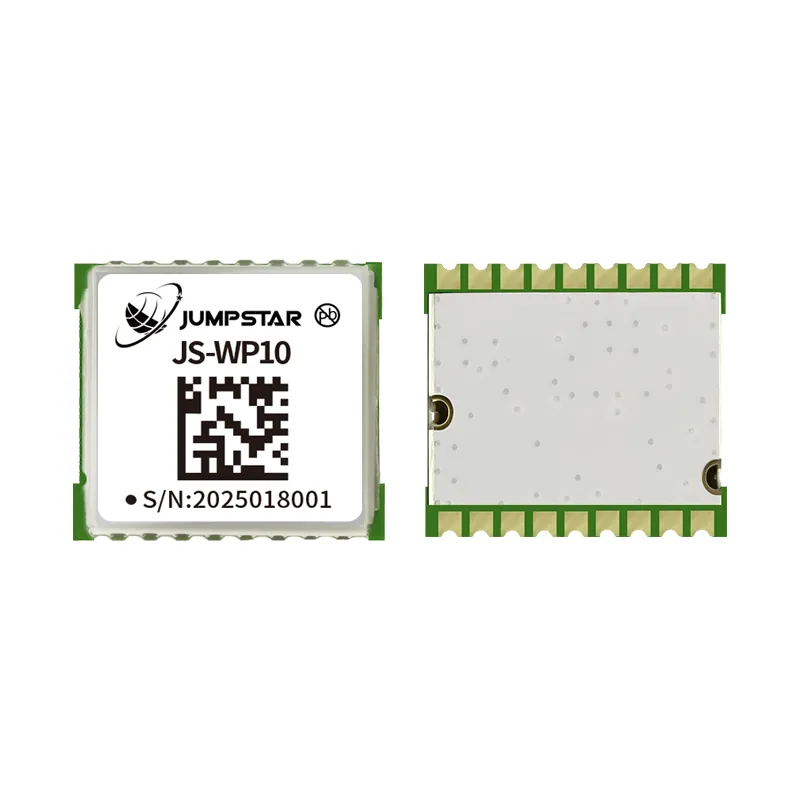
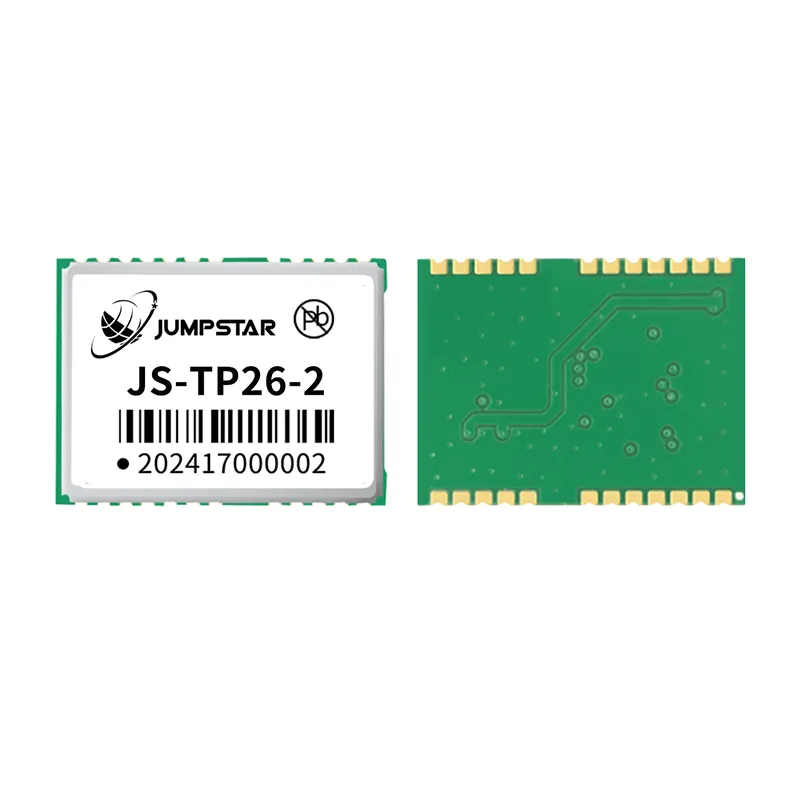
11. Frequently Asked Questions
Conclusion
Selecting the right GNSS module comes down to matching the module's capabilities to your application's real-world requirements — accuracy, power, size, update rate, and signal environment. By understanding how modules work, what types are available, and which specifications matter, you can make a confident decision that avoids costly redesigns and performance compromises.
JUMPSTAR's portfolio of standard precision, high precision RTK, and dead reckoning modules — backed by OEM/ODM customization and flexible MOQ — covers the full spectrum of industrial positioning needs. From the ultra-compact JS-WP10 to the antenna-integrated JS-AUP56FG-9, and from the dual-band JS-TP26-M to the high-speed JS-RP26-2, there is a module designed for your specific use case.
Ready to Select the Right GNSS Module?
Whether you are developing UAVs, robotics, industrial IoT devices, surveying equipment, or intelligent transportation systems, JUMPSTAR provides a comprehensive portfolio of GNSS positioning modules designed for OEM integration.
Explore our complete GNSS module portfolio or speak with our engineering team for expert product recommendations.
.png?imageMogr2/format/webp)
.png?imageMogr2/format/webp)