





UAVs, autonomous robots, agricultural machinery, surveying equipment, industrial vehicles and mobile platforms increasingly depend on GNSS positioning as a core subsystem. For an OEM, integrating a GNSS module is not simply a matter of connecting an antenna and reading coordinates. The performance a device actually achieves in the field is shaped by the antenna, RF layout, power supply, interfaces, correction data, software and the installation environment. GNSS module integration is a design discipline in its own right — and getting it right early is far cheaper than fixing it after mass production.
Why GNSS Module Integration Matters for Industrial Equipment
Industrial equipment uses GNSS in several distinct ways: positioning to report the device's real-time location, navigation to support route planning and automated guidance, automation to feed position input into self-driving vehicles, robots and farm machinery, mapping and data collection for surveying and inspection, and in some systems timing and synchronization from the GNSS clock. Not every industrial device needs centimeter-level RTK. Requirements range from standard GNSS for basic tracking, through sub-meter positioning, to high-precision RTK for applications where accuracy directly affects work quality.
Step 1 — Define the Application Requirements
Start with the requirements, not the module. Document the following before evaluating any hardware: required positioning accuracy, static or dynamic operation, indoor and outdoor environment, update rate, latency, size restrictions, power budget, required interfaces, antenna configuration, correction data needs and operating temperature range.
Different platforms weight these factors differently. A UAV typically prioritizes size, weight, power, update rate, latency and RTK heading. Agricultural machinery emphasizes RTK accuracy, repeatability, stable satellite tracking and long-duration operation. Surveying equipment demands RTK performance, multi-frequency and multi-constellation support and reliable correction data. Autonomous robots care most about position continuity, update rate, heading and sensor integration.
Step 2 — Choose the Right GNSS Module
Selection starts with the accuracy grade the application actually needs: standard positioning, sub-meter positioning or centimeter-level RTK. Constellation support (GPS, BDS, GLONASS, Galileo, QZSS, NavIC and SBAS depending on the product) determines how many satellites are visible in a given region, so confirm what each module supports against its official specification. Frequency support matters for high-precision work: multi-frequency reception (for example L1/L2 or L1/L5) lets the receiver estimate and cancel ionospheric error, which accelerates RTK initialization and improves robustness. Finally, check update rate and latency — dynamic platforms such as UAVs, robots and autonomous vehicles are especially sensitive to low-latency position output.
Step 3 — Select and Integrate the GNSS Antenna
A GNSS module and its antenna cannot be designed independently. Frequency compatibility between module and antenna is the first check, followed by antenna gain, LNA performance, cable loss, connector choice, placement, ground plane and RF interference. The antenna should be positioned with a clear view of the sky, away from large metal obstructions, high-frequency transmitters and motor or high-power electronics, with careful cable routing. The physical distance that is acceptable depends on the specific design, so validate placement on the actual mechanical assembly rather than assuming a fixed rule.
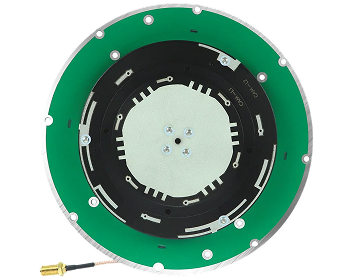
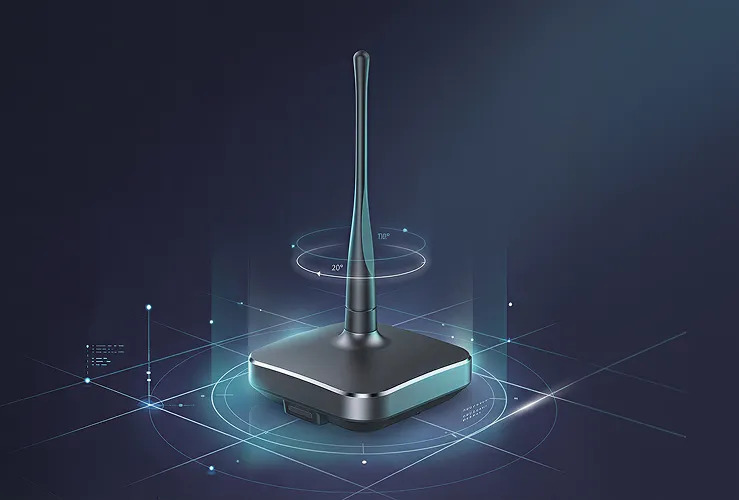
For high-precision products, antenna quality is not a nice-to-have: gain pattern, phase center stability and multipath rejection directly affect the measurements the module processes. A receiver that performs well on a bench can underperform in the field when paired with an unsuitable antenna. JUMPSTAR offers a GNSS antennas range covering patch, helical and choke ring designs to match different integration requirements.
Step 4 — Consider Power and Interface Design
Power and interfaces are the most underestimated parts of industrial integration. On the power side, check input voltage range, consumption, supply stability and electrical noise — switching regulators and motors near the module can degrade GNSS performance. On the interface side, UART, USB, Ethernet, I2C and CAN are all used in industrial designs, but the specific interfaces available depend on the individual module model, so confirm them against the product documentation before locking the host design.
Step 5 — Plan RTK Correction Data
If the application needs RTK, plan the correction source before the hardware is finished. Options include a private base station, network corrections (CORS-style services) and RTCM correction data delivered over radio, cellular or the internet. Final RTK performance is determined jointly by the GNSS module, the correction data, a suitable antenna and proper system integration — a strong RTK module cannot compensate for unreliable correction delivery or a poorly integrated RF chain. JUMPSTAR's high precision RTK modules are designed to pair with standard correction workflows.
Step 6 — Consider Complex Operating Environments
Industrial equipment works where signals are challenged: urban areas, near buildings, in agricultural fields, at industrial sites, close to electrical equipment and on high-vibration platforms. Three effects dominate. Multipath — buildings, vehicles and metal structures reflect GNSS signals before they reach the antenna. RF interference — the device's own electronics and surrounding radio equipment can disrupt GNSS reception. Vibration and motion — UAVs, robots and agricultural machines combine dynamic movement with mechanical vibration. Mitigations include multi-frequency and multi-constellation tracking, interference and multipath mitigation, dual-antenna positioning and sensor fusion with an IMU.
Step 7 — Integrate GNSS With the Host System
A GNSS module rarely works alone. It exchanges data with a flight controller, vehicle controller, industrial computer, MCU, PLC, navigation software or IMU, depending on the product. The typical flow is simple:
For high-dynamics platforms, fusing GNSS with an IMU maintains position output through brief signal outages and provides heading when the device is stationary. But GNSS alone does not complete a navigation task — it supplies position input, and the host system turns that input into guidance, control or data logging.
Testing and Validation Before Mass Production
Validate the complete device, not just the module. Test positioning accuracy against a known reference, check RTK initialization speed and fix stability, and measure signal availability in different environments. Run dynamic tests on the actual platform — UAV, vehicle, robot or agricultural machine — because motion changes antenna performance and multipath. Test the RF environment to confirm the device's own electronics do not degrade GNSS reception, and verify temperature and reliability across the operating range. Laboratory performance and real-world system performance are not always identical, which is why whole-machine testing before mass production is non-negotiable.
Common GNSS Integration Mistakes
The most frequent errors in OEM GNSS projects follow a recognizable pattern:
- Choosing a module based only on accuracy — focusing on "centimeter-level" while ignoring interfaces, power, environment and antenna compatibility.
- Ignoring antenna design — a good receiver paired with a poorly chosen or badly placed antenna underperforms in the field.
- Poor RF layout — digital circuits, power stages and communication radios interfere with GNSS reception.
- Insufficient correction data planning — an RTK system without a reliable correction source never delivers its rated accuracy.
- Testing only under open-sky conditions — performance degrades in urban, metallic or industrial environments that were never part of the test plan.
JUMPSTAR GNSS Solutions for OEM Integration
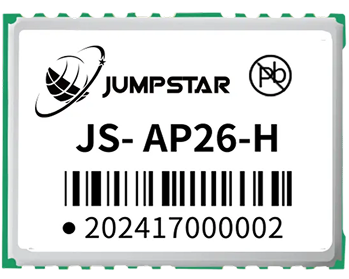
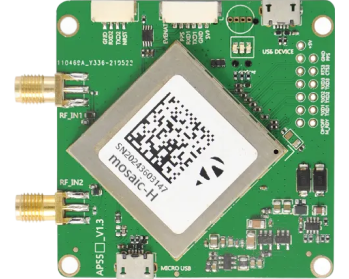
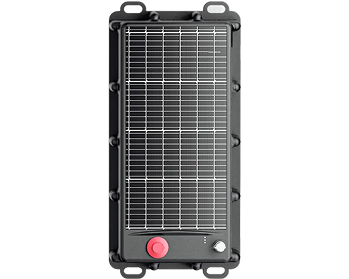
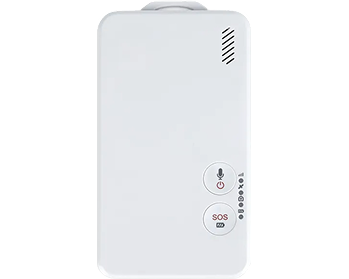
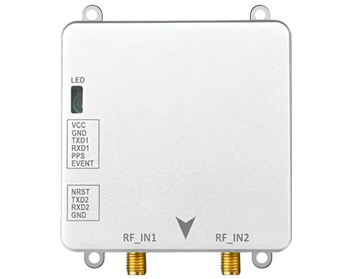
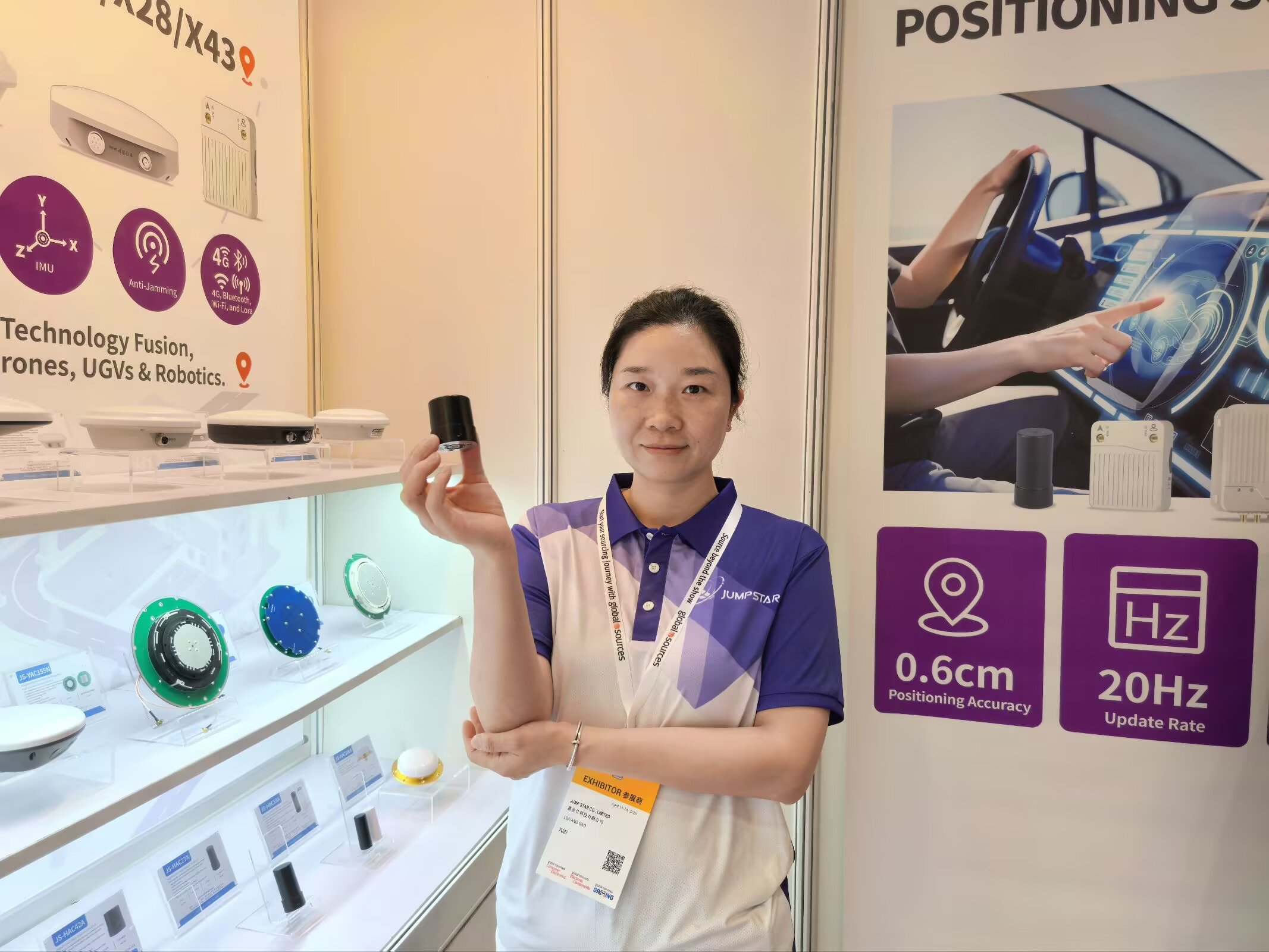
JUMPSTAR provides the full building blocks of a GNSS positioning system: GNSS modules, RTK modules, GNSS OEM boards, receivers, antennas, positioning terminals and OEM/ODM solutions. Because integration needs differ by accuracy, size, power, interface, antenna and application, JUMPSTAR tailors the offering to the device rather than forcing a one-size-fits-all module. Three examples illustrate the range:
JS-AD56UB8 — Standard GNSS Integration
A compact multi-GNSS module with high sensitivity (-167 dBm), 10 Hz update rate and sub-meter accuracy. Its small footprint and low complexity make it a straightforward choice for UAVs, handheld devices, logistics and automotive tracking where standard positioning is sufficient. See the JS-AD56UB8 for full specifications.
JS-M6D — Multi-Frequency RTK Integration
A multi-constellation, multi-frequency RTK module with centimeter-level accuracy and 96 search channels, supporting GPS, BDS, GLONASS and Galileo. It suits precision agriculture, surveying and machine control where RTK correction data is available and dual-frequency tracking accelerates initialization. See the JS-M6D for full specifications.
JS-BCK43H-3 — RTK + IMU for Complex Environments
A dual-antenna RTK module with a built-in IMU, 0.2° heading accuracy and 60 dB anti-interference capability. The integrated inertial sensor maintains position output through short GNSS outages, which makes it well suited to drones, robots and autonomous platforms operating near interference sources. See the JS-BCK43H-3 for full specifications.
Conclusion
Successful GNSS module integration is more than choosing a high-accuracy module. The complete system — module, antenna, RF design, power, interfaces, correction data, software and system testing — determines what the finished device delivers in the field. Define requirements first, match the module to the application, treat antenna and RF layout as part of the design, and validate on the real platform before mass production. JUMPSTAR provides GNSS modules, RTK solutions, OEM boards, receivers, antennas and customized positioning solutions for manufacturers developing industrial and intelligent equipment. Contact JUMPSTAR to discuss your GNSS integration requirements.
.png?imageMogr2/format/webp)
.png?imageMogr2/format/webp)